The right access
Customer ledgers and repayments are managed by an admin. Staff can bill within their permissions without access to the full customer ledger.
 TharasuAI
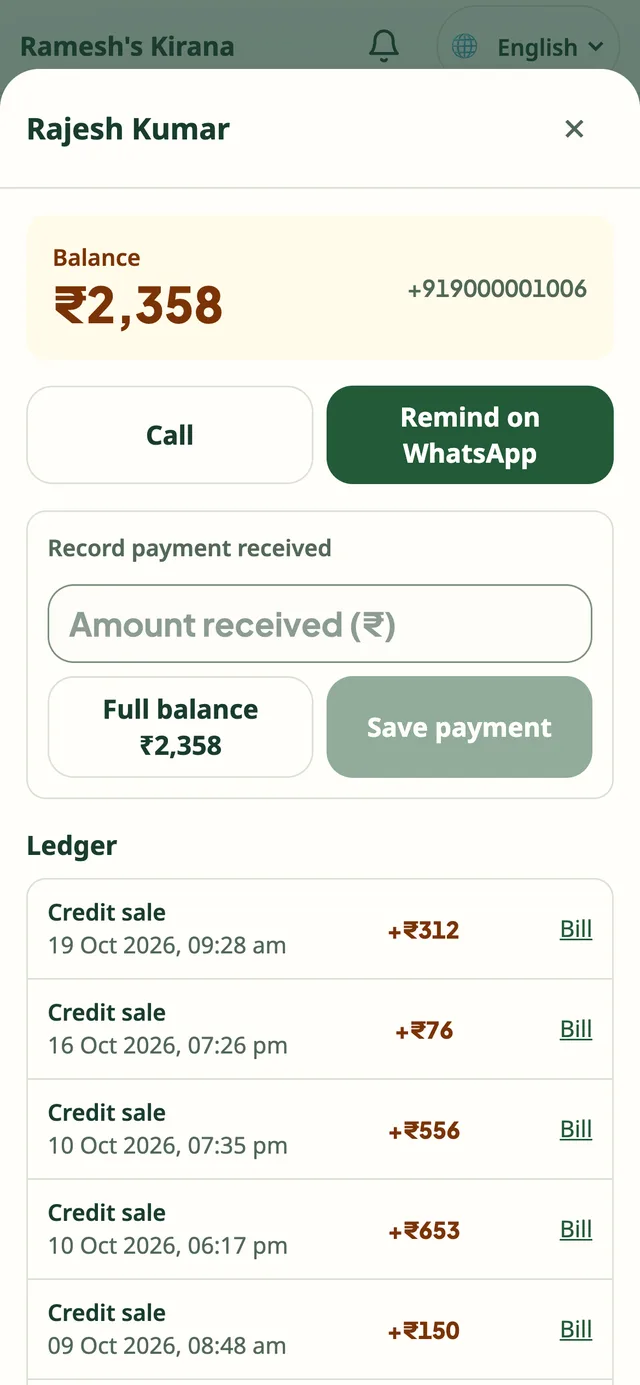
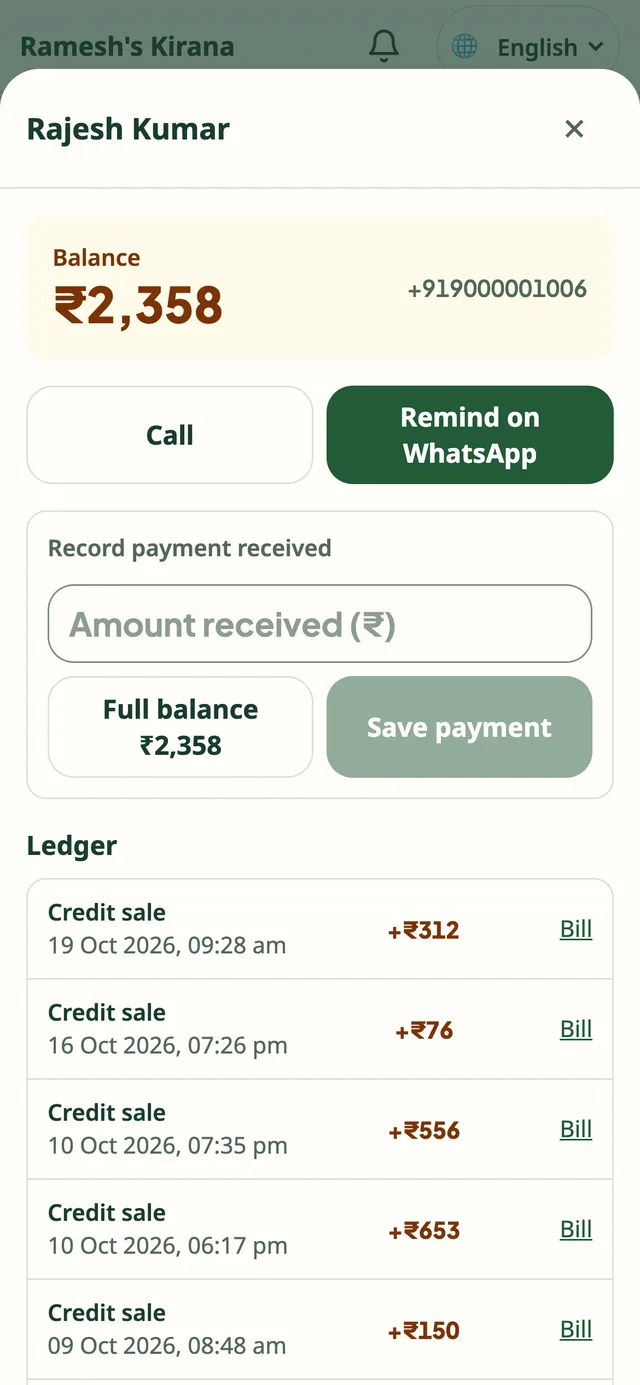
See what a customer still owes—from unpaid bills to repayments you record.
Independent application sample — not the example above
01 / The unpaid part of a bill
A ₹90 bill. ₹60 received. The unpaid ₹30 is linked to a named customer when the bill is confirmed.
Bill total
Paid at billing
Due at billing
When you later receive ₹10, an admin records the repayment in the customer account. The current balance becomes ₹20.
Demo Customer A starts at ₹0 and has no other entries. This is an illustrative example; no live account is shown.
This example records money after you receive it through your usual method. Recording an amount is separate from transferring or verifying the payment.
02 / Two records, different jobs
The customer balance reflects repayments. The original receipt keeps the amounts saved at billing.
Current customer balance ₹20after the later ₹10 repayment
The illustration distinguishes the amounts saved on the original receipt from the later customer balance. It is not a captured transaction.
03 / Make sure it fits
Customer ledgers and repayments are managed by an admin. Staff can bill within their permissions without access to the full customer ledger.
Repayments belong to the customer’s account. They change the current balance while the original receipt stays as it was. Other bills and payments can also change that balance.
This example starts with dues from one bill. Ask the team how earlier balances can be handled before planning a move from your existing records.
Shop billing · Receiving and recorded stock · Practical shop guides
A conversation about your shop
Talk through how bills and repayments fit your customer records.
Or speak to the Tharasu AI team directly: